
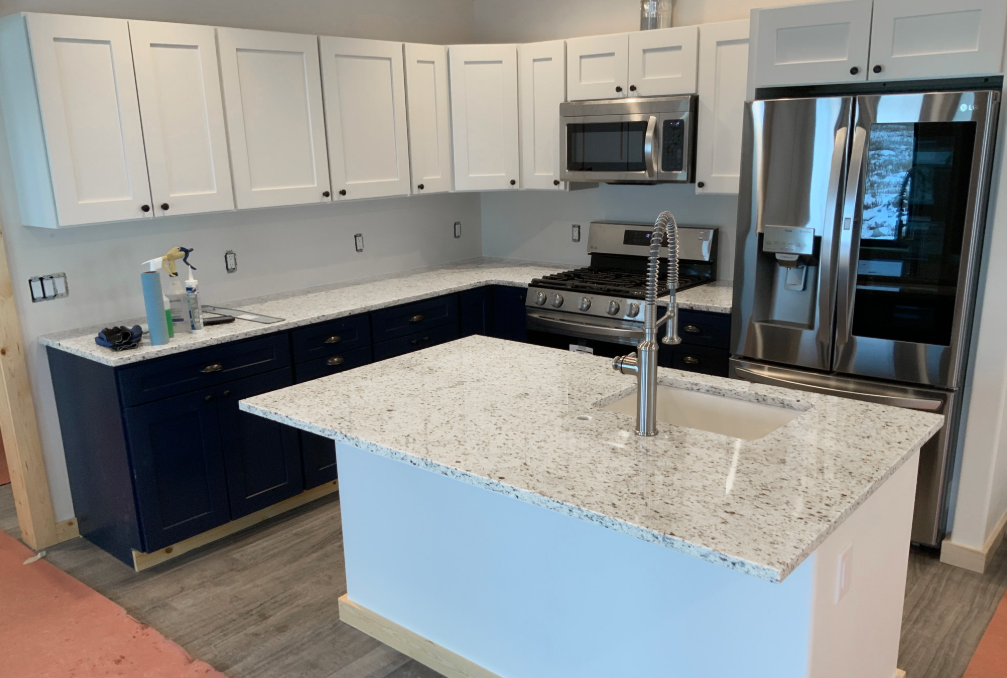
Choosing granite is already a smart decision for homeowners who want a long-lasting, natural surface with character. The next big choice comes down to which finish is right for your project. Leathered and honed granite are two popular finish options, both offering distinctive benefits. For homeowners throughout Montana who are renovating a kitchen or designing a new space, knowing how these finishes differ will help you invest in the option that delivers the best long-term value.
Whether you are upgrading a home in Bozeman, freshening up a cabin near Yellowstone, or planning cabinetry and countertops for new construction, the finish you select influences maintenance, scratch resistance, resale perception, and overall kitchen usability.
What Makes Honed Granite Different?
Honed granite has a soft, matte surface. Instead of a high polish, the stone is ground until the surface becomes smooth and flat. The finish works particularly well for homeowners who want a surface that reduces glare under natural light coming in through large windows or skylights.
Honed granite often gives darker stones a lighter appearance, and lighter stones a more organic presence. It is also favored in spaces designed around simplicity, neutral colors, or natural textures.
Because honed granite has a porous surface, sealant maintenance is more important. When a kitchen sees daily cooking, regular meal prep, or constant contact with oils, resealing keeps the slab performing well.
Pro Tip for Honed Granite: Use cutting boards and keep citrus, wine, and oils wiped promptly. These are common elements that may mark a honed surface over time if they sit too long.
For additional learning, homeowners can review available stone options on Granite Mountain’s layout planning pages, including granite countertops and material guidance found in the blog section.
What Makes Leathered Granite Different?
Leathered granite has a textured finish. The surface is brushed to highlight small ridges and movement in the stone. This finish appeals to homeowners who want something tactile and visually distinctive.
One of the biggest benefits is how well leathered granite conceals fingerprints and minor water spots. For homes with frequent hosting, large families, or kids moving through the kitchen constantly, leathered granite tends to keep a clean appearance throughout the day.
Leathered granite often emphasizes richer tones within the slab. Patterns and variation tend to appear deeper and more layered, making it ideal for homeowners who want their countertop to be a focal point.
Pro Tip for Leathered Granite: Pair leathered surfaces with softer cabinet tones like white, natural hickory, or black-wash stains. This contrast makes the counter visually stand out, especially in open concept kitchens.
Cost Considerations in Montana Projects
For homeowners pursuing projects throughout Montana, cost is influenced by:
- Slab availability in the specific finish
- Material thickness (3cm is most commonly chosen)
- Edge profiles
- Add-ons like full-height splash panels
In most cases, leathered granite has a slightly higher finishing cost since it includes an additional brushing stage. However, the difference is often minor when evaluated over the life of the countertop.
From a value standpoint, many buyers prefer leathered granite in homes with rustic or mountain-style architecture, which increases resale desirability. In newer construction developments, honed granite often pairs well with modern cabinetry and lighting, making it equally appealing.
Which Finish Offers Better Durability?
Both finishes are durable because the foundation is still natural granite. The biggest difference is in surface interaction.
Honed granite performs best when:
- You want a smooth prep space
- Your kitchen design is matte-leaning
- You are confident in a resealing routine
Leathered granite performs best when:
- You want low-maintenance visual upkeep
- Your kitchen has high daily use
- You prefer texture under hand
Pro Tip for Busy Kitchens: Leathered granite is often the more practical finish when multiple people are using the kitchen daily. The surface masks heavy use and requires less frequent wiping.
Maintenance Differences that Matter Over Time
A typical Montana household with daily cooking will benefit most from:
Honed surface maintenance recommendations:
- Wipe spills immediately
- Reseal every 1–2 years
- Avoid long exposure to cooking oils
Leathered surface maintenance recommendations:
- Clean with neutral stone cleaners
- Maintain occasional resealing
- Use soft-bristle cloths to preserve texture depth
Granite Mountain offers guidance during installation and completes sealing at the time of fabrication for both finishes. Homeowners can also view details in the Quartz Countertops page for similar care tips.
Which Finish Gives the Best Long-Term Value?
Both finishes deliver value, but each does so differently.
Leathered granite provides value through its consistent appearance over time, especially in busy kitchens. Honed granite provides value through versatility, clean lines, and compatibility with many cabinet and backsplash styles.
Homeowners planning to stay long term often choose leathered granite for its day-to-day usability. Buyers preparing a home for sale often choose honed granite because it appeals to modern design preferences seen in current Montana-area build trends.
Ready to Decide Which Finish Fits Your Home?
Granite Mountain offers both honed and leathered granite slabs in full-size viewing areas so homeowners can compare surface movement, light reflection, and tactile feel before committing. Seeing both options side-by-side makes decision-making easier.
If you are planning a remodel or building new construction in Montana, contact Granite Mountain for guidance, slab viewing, and a detailed estimate.
Schedule your design visit today and work with a team that fabricates, installs, and supports your countertop selection from start to finish.
Leave a Reply